
How millwork reps can qualify quote requests before estimating
Use account history and buyer conversations to decide which millwork requests need a full estimate now, more qualification or an honest decline.

Most CRMs are built around a simple model: track your contacts, manage your pipeline, log your activity. That model works well for a lot of businesses. For LBM dealers, it leaves most of the actual work undone.

A rep at an LBM dealer opens their CRM on a Monday morning. They have a list of accounts to call, a handful of open quotes to follow up on, and no clear signal about where to spend their time. They make calls in the order the names appear, chase quotes that may have already gone cold, and miss the contractor who just pulled a permit for a $400K custom home in their territory.
That is the problem a CRM should solve. Not just storing contacts and logging calls, but actually helping reps find revenue and go get it. That is where the comparison between tools like HubSpot, Salesforce, Pipedrive, or Monday and a platform built for building materials dealers gets interesting.
Most CRMs are built around a simple model: track your contacts, manage your pipeline, log your activity. That model works well for a lot of businesses. For LBM dealers, it leaves most of the actual work undone.
The revenue opportunities in a building materials business are not obvious without data. Which accounts are buying lumber but not roofing? Which contractors just pulled permits for jobs your reps have not heard about yet? Which accounts have quietly reduced their order frequency over the last 90 days? A CRM that can’t answer those questions is not giving your team much to work with.
SalesJack is built to answer those questions automatically, for every account, every week, without reps having to dig for it themselves.
Most LBM dealers already know permit data exists. Many are using it in some form. The problem is not awareness. The problem is that the process for turning permits into sales conversations is almost always manual: someone downloads a spreadsheet, filters it, and emails leads to reps. That process breaks down when that person gets busy. By the time a lead reaches a rep, the contractor is already talking to other suppliers.
SalesJack automates the entire workflow. Permit data is pulled from jurisdictions automatically. AI matches each permit against your existing customer records to identify whether it belongs to a current account or a new prospect. Contact information is enriched. The lead routes to the right rep with context about the project and the relationship.
The goal is getting reps in front of contractors while projects are still in the planning phase, before material commitments have been made. That window is narrow. Manual processes consistently miss it.
PARR Lumber generated $500K in new revenue in six months working that window systematically. The full story is in the case studies.
Cross-sell management at most LBM dealers today runs through manager intuition and rep conversations. Managers ask which categories top accounts are buying, reps give qualitative answers, and everyone does their best with what they know. For the largest accounts, experienced reps usually have a reasonable handle on the picture. For mid-sized accounts and newer relationships, the gaps go unnoticed. Not because the account is at risk — but because no one has a systematic way to see them.
Those gaps are margin sitting on the table. A contractor buying framing lumber who has never been offered roofing. A remodeler buying doors and windows through a separate supplier because no one flagged it. These are not rescue situations. They are high-profit opportunities that never made it onto a rep’s radar.
SalesJack surfaces cross-sell gaps automatically across every account. It maps ERP transaction history by product category, integrates data from separate quoting systems for windows, trusses, and other engineered products, and groups quotes by job address so reps can see which categories have and have not been sold to each project. When a gap appears, the right rep gets an alert. Not just for the accounts they already watch closely. Every account.
HubSpot and Salesforce are strong platforms. They are well-suited for businesses with marketing-led sales motions or complex enterprise workflows. For LBM dealers, the gap is not about the platform being weak. It is that the capabilities LBM dealers need require logic that does not exist anywhere in those ecosystems.
Permit lead automation is not something HubSpot or Salesforce offer in limited form. It is not there. An agency could build a pipeline that pulls permit data, but they would still need to build the matching logic that connects permit names to your ERP customer records, the enrichment layer, the routing rules, and the workflow that ties it all together. From scratch. On a platform not designed for it.
Cross-sell gap identification requires understanding what LBM product categories are, how to map them from ERP transaction data, how to account for separate quoting systems, and how to group quotes by job address. An agency implementing HubSpot for an LBM dealer would need to build all of that before anything useful surfaces. Most agencies doing that work have never sold lumber. You pay for their learning curve, then maintain custom code every time your ERP changes or your workflows evolve.
ERP integration adds another layer. Most LBM systems do not have a clean API to flip on. Getting usable data out of Epicor BisTrack, ECI Spruce, or DMSi Agility requires connecting via API where available, EDI, VPN tunnel, or scheduled file extracts. That work is not included in a HubSpot or Salesforce subscription. It is a separate project you own.
Six-month implementation timelines are common for custom builds on these platforms. A lower per-seat price does not stay lower once you count the full project cost.
SalesJack is not a horizontal CRM configured for lumber yards. It is a vertical platform built around how building materials sales teams operate. ERP integration with Epicor BisTrack, ECI Spruce, DMSi Agility, Genetiq, and Ponderosa is handled during a 4 to 6 week implementation. Category mapping, job address grouping, and quoting system integration are included as part of onboarding, not scoped as a separate project. The CRM gives every role the view they need: reps see their accounts, open quotes, and cross-sell alerts; managers see team activity and at-risk revenue; owners see retention trends and wallet share.
More on how SalesJack handles permit prospecting and account intelligence on the Analytics and Prospecting pages.
Implementation takes 4 to 6 weeks including ERP integration, product category mapping, and on-site training. No separate agency engagement required. Book a demo to walk through what the dashboards look like for your team, or use the Contact page to talk through your specific situation.
The difference between a CRM built for building materials retail and one that was not is not a feature list. It is whether the system knows how LBM dealers sell, what revenue opportunities look like in this business, and how to put that information in front of the right rep at the right time.
A lower per-seat price that still leaves your reps without permit intelligence, cross-sell alerts, and account health monitoring is not actually a better deal. It is a different product built for a different problem.
For more on evaluating sales technology for LBM dealers, check out the SalesJack blog.
Use account history and buyer conversations to decide which millwork requests need a full estimate now, more qualification or an honest decline.

Use ERP quote and order records with buyer feedback to understand lost material sales and improve the next bid, without assuming every loss was price.
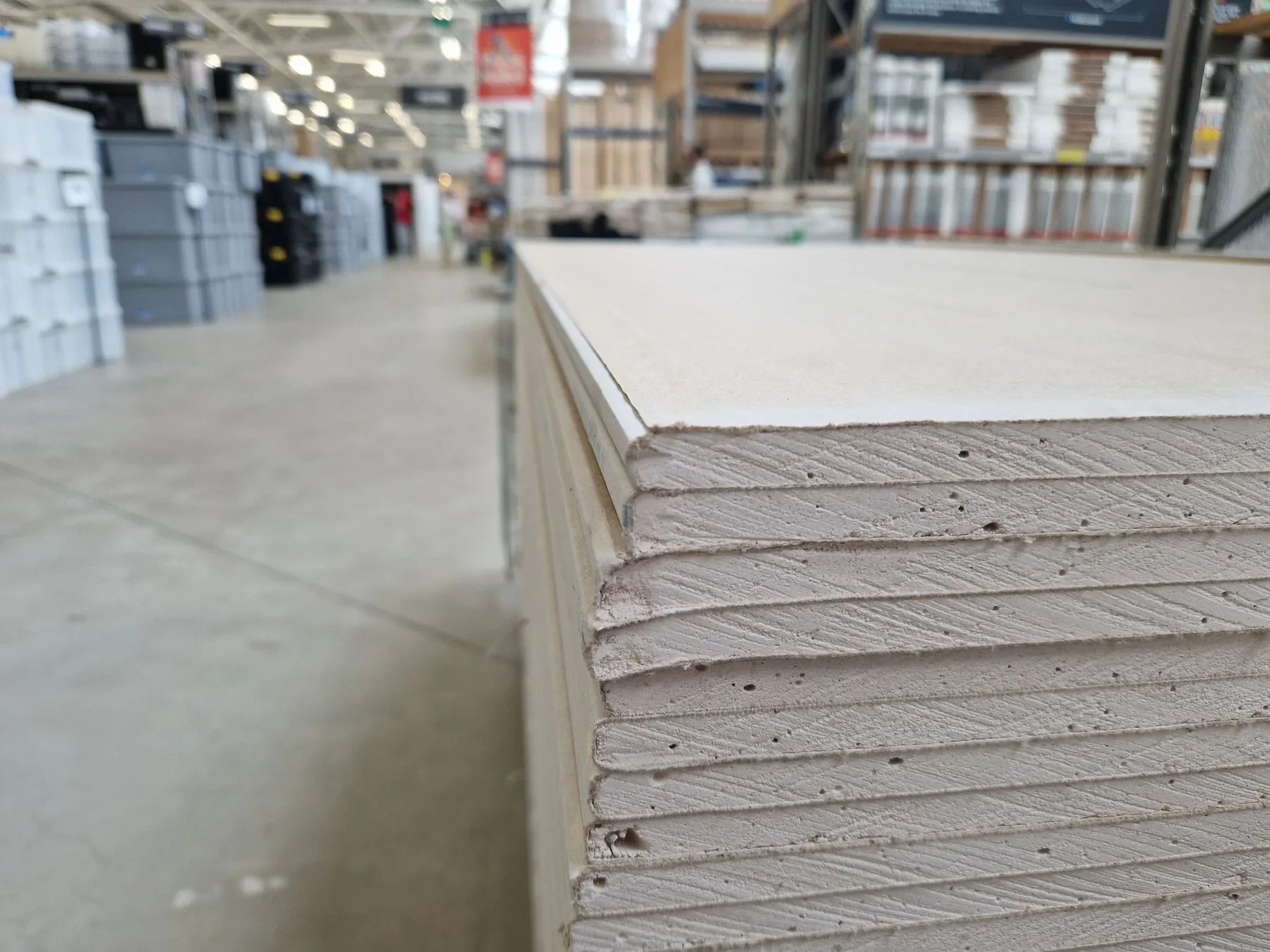
Connect order records, contractor conversations and follow-up when drywall arrives damaged or short. Keep customer promises separate from unapproved remedies.