Most building materials retailers evaluate CRM software the same way they would evaluate any business software. They compare feature lists, watch vendor demos, and pick the system with the most checkmarks.
Then they spend six months implementing it, three months trying to get reps to use it, and a year realizing it does not fit how their business actually works.
The problem is not the CRM. It is the evaluation process. Generic evaluation criteria miss what actually matters for building materials retail. Vendor demos hide the complexity. Feature lists do not reveal whether the system will get used daily or abandoned after 90 days.
Evaluating a CRM for a lumber yard or building supply store requires different questions, different priorities, and a clearer understanding of what makes adoption succeed or fail.
Why standard CRM evaluation fails
Most CRM evaluation guides are written for SaaS companies or B2B sales teams that move leads through linear pipelines. They emphasize lead scoring, email automation, and deal stages.
Building materials retailers do not operate that way. Sales happen through quotes generated in the ERP. Contractors buy by project, not by sales cycle. Reps manage territories with hundreds of active accounts. Managers care about quote conversion, product mix, and margin, not pipeline velocity.
When evaluation focuses on generic features, retailers end up with systems designed for different businesses. The CRM becomes a reporting overlay that duplicates ERP data without making it more actionable.
Adoption suffers because the system does not match the workflow.
What to evaluate first: integration architecture
The most important decision in CRM evaluation for building materials retailers is not features. It is integration.
A CRM that does not connect properly to the ERP will fail. Quotes will not sync. Customer data will drift out of date. Product categories will not map cleanly. Reps will stop using the system because it shows incomplete or stale information.
Ask vendors how their CRM integrates with your specific ERP. Ask for references from customers using the same ERP. Ask to see the integration working in a live environment, not a demo script. Ask how long implementation takes and who handles data mapping, transformation, and ongoing maintenance.
If the vendor cannot commit to a clear integration path or redirects to a third-party implementation partner, that is a red flag. Integration complexity almost always exceeds what vendors describe in initial conversations.
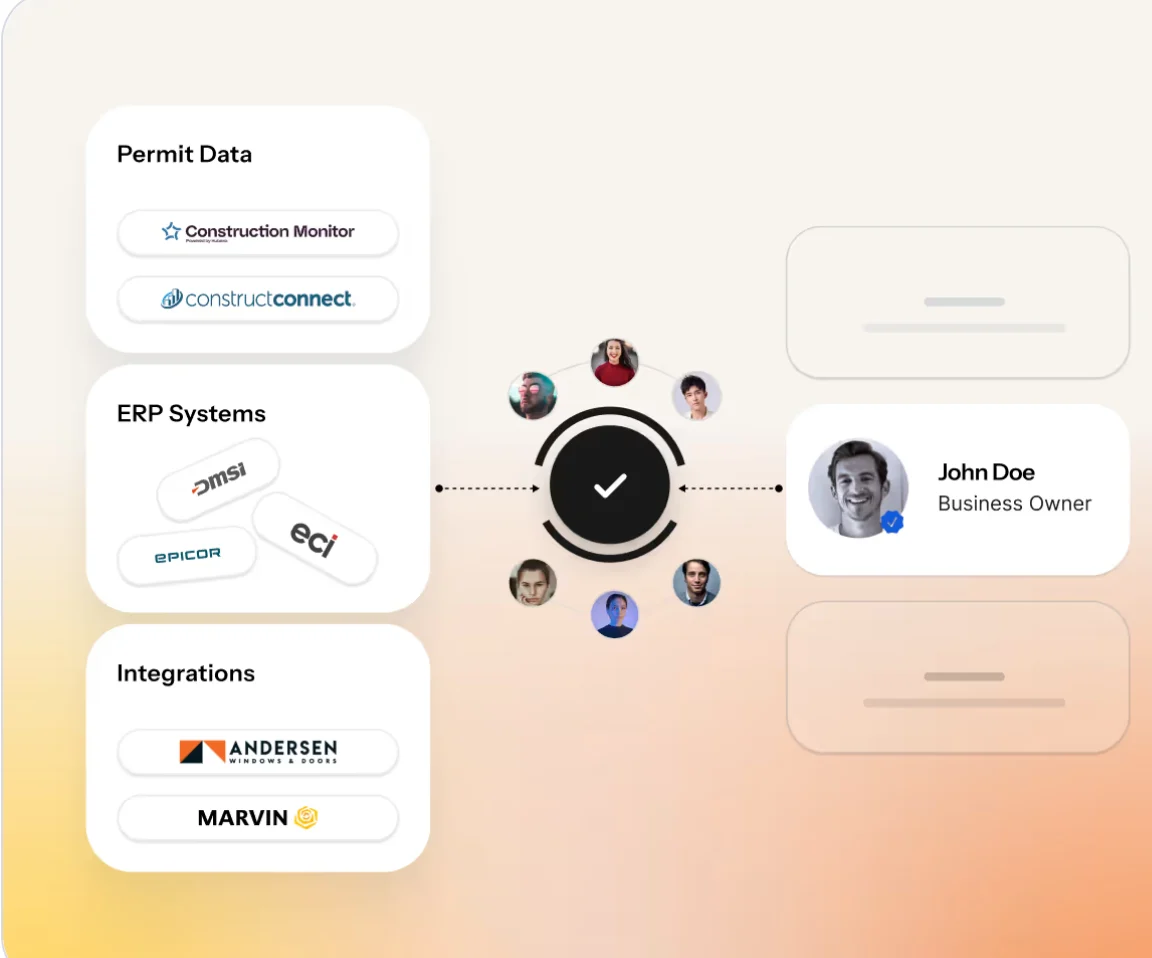
SalesJack is built specifically for building materials retailers and integrates directly with industry ERPs like Epicor, ECI, DMSI, Genetiq, and Ponderosa. The standard rollout takes 4-6 weeks including data migration and on-site training.
The features that actually matter
Once integration is clear, evaluation should focus on the features that directly support how building materials sales teams work daily.
Quote visibility and follow-up: Can reps see all open quotes for their accounts in one view? Does the system show quote age, status, and next steps without requiring them to log into the ERP? Does it flag stalled quotes automatically?
Customer account management: Does the system show complete purchase history by product category? Can reps see which contractors are active versus dormant? Does it surface accounts that have stopped buying or started buying less?
Territory and account assignment: Can the system auto-assign leads and accounts based on territory, customer type, or rep specialization? Does it handle inside and outside sales working the same accounts across multiple locations?
Permit prospecting: Does the CRM pull permit data automatically from local jurisdictions? Does it clean and categorize permits so reps only see relevant opportunities? Does it identify which permits involve existing customers versus new prospects?
Reporting and visibility: Can managers see quote conversion rates, category penetration, and rep activity without manual reporting? Does the system surface trends like declining accounts or product mix changes?
If a CRM cannot deliver these capabilities cleanly, it will not improve sales execution.
The features that do not matter
Many CRMs market features that sound valuable but add no operational benefit for building materials retailers.
Email marketing automation is less useful when most contractor communication happens by phone or in person. Lead scoring does not apply when leads come from permits, walk-ins, and referrals rather than inbound marketing. Multi-channel attribution tracking is irrelevant when the business does not run digital ad campaigns.
Deal stages and pipeline management tools are built for linear sales processes. They do not fit businesses where the same contractor gets 20 quotes a year and buying happens by project, not by deal.
Evaluate features based on whether they support how your sales team actually works, not based on how many features the vendor can list.
What to ask about implementation
Implementation determines whether the CRM gets adopted or abandoned. Most vendors underestimate the time and complexity required to go live.
Ask how long implementation takes from contract signature to full deployment. Ask what data needs to be cleaned or transformed before migration. Ask who handles ERP integration setup and whether that is included in the base price or requires additional services.
Ask whether the vendor provides on-site training or only online videos. Ask whether they will configure the system to match your workflow or expect you to adapt your process to their defaults. Ask what happens if adoption lags after go-live.
If the vendor cannot provide a clear implementation plan with specific timelines and deliverables, implementation will take longer and cost more than expected.
SalesJack includes on-site training and workflow customization as part of standard rollout. The team handles data migration, ERP integration, and rep training to ensure the system fits how the business operates.
How to involve the sales team in evaluation
Sales reps will use the CRM daily or not at all. Their input during evaluation is critical.
Include at least two working reps in the evaluation process. Have them participate in vendor demos and ask questions about daily workflow. Let them test the system with real accounts and quotes, not sample data.
Ask reps whether the system would make their job easier or add administrative work. Ask whether they can find the information they need quickly. Ask whether the CRM would help them follow up faster or just duplicate what they already track in spreadsheets.
If reps are skeptical during evaluation, they will not use the system after rollout. Their concerns are data, not resistance to change.

Red flags during vendor evaluation
Certain patterns during CRM evaluation predict implementation problems.
The vendor claims their system works for all industries. Building materials retail has specific workflows that generic CRMs do not handle well. A vendor that has not built features for quote management, ERP integration, and permit prospecting will struggle to deliver what you need.
The vendor redirects ERP integration questions to a third-party implementation partner. This usually means the integration is more complex than advertised and will cost more than the base CRM subscription.
The vendor cannot provide references from similar businesses using the same ERP. If they have not done this implementation before, you will pay for their learning curve.
The demo uses generic examples rather than your actual workflow. Vendors should be able to show how their system handles quotes from your ERP, accounts from your customer base, and permits from your local jurisdictions.
Implementation timelines are vague or stretch beyond 90 days. Long implementations signal complexity that will slow adoption and increase costs.
What success looks like after 90 days
A well-implemented CRM should show measurable results within the first 90 days.
Quote follow-up rates should improve because reps see all open quotes with status and age in real time. New customer acquisition should increase because permit leads are systematically worked. Dormant account reactivation should rise because the system flags when inactive contractors start building again.
Managers should see clearer visibility into rep activity, account health, and category penetration. They should be able to identify coaching opportunities based on data rather than gut feel.
If these outcomes are not visible after 90 days, the CRM either does not fit the business or was not implemented correctly.
How SalesJack approaches evaluation
SalesJack is built specifically for building materials retailers. The evaluation process focuses on whether the system matches how your business operates today, not on adapting your workflow to generic CRM features.
The team shows how quotes, customer data, and permits flow through the system using examples from similar businesses. They provide references from lumber yards and building supply stores using the same ERP. They commit to a clear implementation timeline with on-site training included.
The goal is adoption, not just installation.
The bottom line
Evaluating CRM software for building materials retailers requires different criteria than generic CRM comparisons. Integration quality matters more than feature count. Implementation support determines adoption rates. Industry-specific functionality beats customization complexity.
The difference between a CRM that gets used and one that gets abandoned shows up in the first 90 days. It comes down to whether the system fits how sales teams actually work or forces them to adapt to a process designed for different businesses.
SalesJack is built for lumber yards and building supply stores that sell to contractors. The system integrates with industry ERPs, includes permit prospecting, and supports territory-based sales execution without requiring customization or third-party implementation services.
Building materials retailers that choose the right CRM see results quickly. PARR Lumber, one of the largest suppliers in the Pacific Northwest, drove $500,000 in new sales after implementing SalesJack. Evanston Lumber generated $2.5M in tracked revenue and grew new customer acquisition by 825%.



