
How to manage contractor accounts across lumberyard branches
A practical account-coverage guide for multi-branch lumber yards. Define the owner, share job context, and coordinate quotes and handoffs across locations.

ERP integration is not a checkbox feature. It determines whether a CRM helps sales teams follow up, expand accounts, and manage margin or becomes a reporting tool no one trusts. Learn what effective ERP integration actually means for building materials CRMs.

In building materials retail, the ERP is the system of record for quotes, pricing, customer accounts, product catalogs, and transaction history. The building materials retailer CRM's job is not to replace those functions. It is to make them actionable for sales teams.
Most mainstream CRMs like Salesforce and Hubspot claim integrations as a feature. Few deliver relevant integrations in a way that meaningfully improves how building materials retail sales teams operate. To do an integration with Salesforce/Hubspot you would need a 3rd party agency to support, costing additional money. And even then, this can breakdown if the data is not cleaned/organized properly
The gap shows up quickly. Quotes created in the ERP don’t surface in the CRM. Customer data syncs incompletely or becomes stale. Product categories exist in one system but not the other. Sales reps stop using the CRM because it does not reflect what is happening in the business.
ERP integration in this context is not a technical checkbox. It is the structural difference between a CRM that supports revenue execution and one that becomes a reporting afterthought.
Real integration means quotes generated in the ERP appear automatically in the CRM with full context: customer, project, category mix, status, age. Customer account data stays current without manual entry. Product categories and pricing rules flow through so reps can identify expansion opportunities based on actual buying behavior.
When integration works this way, the CRM becomes a sales execution layer on top of operational data rather than a parallel system that duplicates or contradicts it.
SalesJack, on the other hand, is able to integrate with any industry ERP (e.g: Epicor, ECI, DMSI, Genetiq, Flitch, Ponderosa). It builds a data feed and will automatically update your CRM based on your existing data.
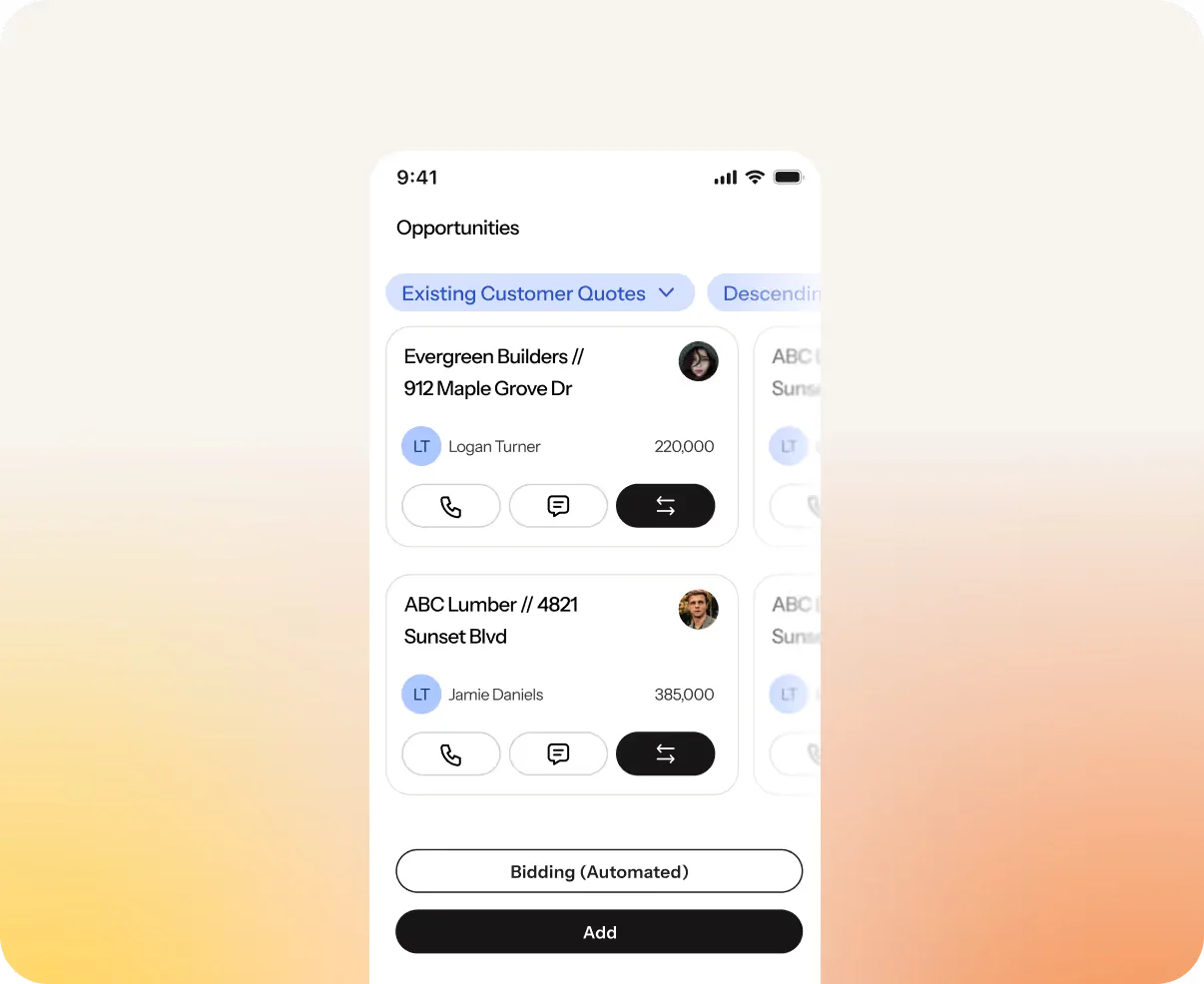
Sales reps in lumber yards and building supply stores work fast. They manage contractor accounts across large territories, handle walk-in traffic, site visits, completing take-offs and coordinate deliveries while tracking dozens of open quotes.
If the CRM requires manual data entry or shows outdated information, it gets abandoned. Reps revert to spreadsheets, memory, and ERP reports. Managers lose visibility. Follow-up becomes inconsistent.
The problem is not laziness. It is that disconnected systems create work without creating value. A CRM that does not reflect current quotes, accurate account balances, or real product movement does not help anyone sell more.
Research shows that 50% of CRM projects fail, primarily due to poor user adoption. In building materials retail, integration quality is the primary driver of that outcome. Adoption depends on the CRM surfacing information reps need without forcing them to maintain it manually.
SalesJack addresses this through automation and AI. Quotes appear in the system as soon as they are created in the ERP. Customer updates happen automatically. The rep's job becomes following up and selling, not data maintenance.
The most common integration failures in building materials CRMs are predictable.
Quotes sync once at creation but never update when status changes in the ERP. Customer addresses, contact names, or account statuses drift out of sync. Product catalogs do not map cleanly, so category reporting becomes unreliable. Transaction history either does not sync at all or syncs so slowly it is not useful for daily execution.
Each of these gaps forces a choice: ignore the CRM or spend time reconciling data. Most teams choose the first option.
ERP data usually needs transformation before it can just be loaded into a CRM:
-Customer contact information needs to be cleaned and deduplicated
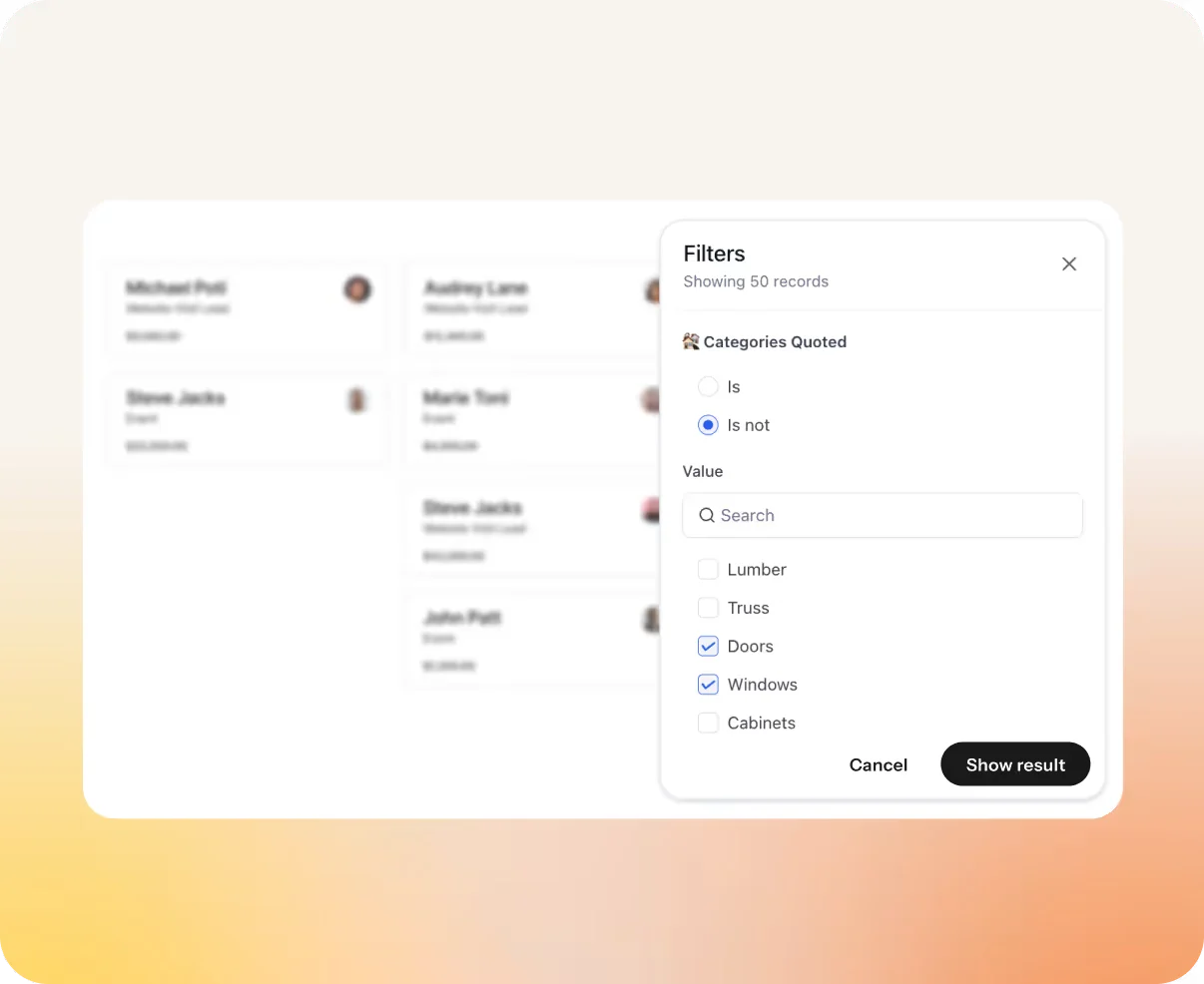
-Product codes and classes need to be mapped into categories in order to be able to identify cross-sell opportunities
-Address data needs to be validated to be able to combine quotes so the same jobsites
Average CRM adoption rates across sectors remain at 26%. In building materials retail, where reps manage high volumes of contractor accounts and quotes, poorly integrated systems fall well below that benchmark. Over time, the CRM becomes a place where activity is logged after the fact to satisfy reporting requirements. It stops being a tool that helps sales teams win more business.
When ERP and CRM integration is built correctly, several operational changes happen quickly.
Quote follow-up improves because reps see every open quote with age and status in real time. Category expansion becomes systematic rather than opportunistic because buying patterns are visible at the account level. Dormant accounts get flagged earlier when project activity resumes. Margin management improves because reps and managers see pricing and discount context before decisions are made.
These are not aspirational outcomes. They are what happens when sales teams have access to complete, current information in a system designed for their workflow.
Building materials retailers do not need to understand API protocols or data schemas. They need to know whether the integration will deliver specific outcomes.
Can reps see all open quotes for their accounts without logging into the ERP? Does customer data update automatically when changes occur in the ERP? Do product categories and transaction history sync reliably enough to support category-level coaching and account planning?
If the answer to any of those questions is no, the integration is not sufficient. The CRM will add overhead without improving execution.
SalesJack connects directly to the ERP systems used by building materials retailers. Quotes, customers, products, and transaction history sync automatically so sales teams work with current data.
The integration is designed to support daily execution rather than periodic reporting. Quotes appear in the CRM as soon as they are created in the ERP. Customer and product data stays current. Category-level visibility is built in so reps and managers can identify expansion opportunities based on actual buying behavior.
The system reduces administrative work instead of adding to it.
Vendors will claim integration. The question is whether their integration supports the execution model building materials retailers actually need.
Ask how quotes flow from ERP to CRM and whether status updates sync in real time. Ask whether customer data stays current automatically or requires manual maintenance. Ask how product categories map and whether transaction history is available at the account level for rep use.
Ask to see it working in a live environment with real data, not a demo script.
Ask about the go-live timeline. If the vendor cannot commit to a clear implementation path, the integration is likely more complex than they are presenting.
Ask if they have experience working with your specific ERP.
Who will set-up and maintain the database connection. Will they or an external agency?
What if data from ERP needs to be transformed, are they able to support?
SalesJack's standard rollout takes 4-6 weeks from contract to full deployment with on-site training and data migration handled as part of the process.
ERP integration in a building materials CRM is not a feature. It is the foundation that determines whether the system will be used or ignored.
CRMs that integrate poorly become reporting overlays. CRMs that integrate well become execution systems that help sales teams follow up faster, sell more categories, and manage margin with better context.
SalesJack is built as the latter. The system connects ERP quotes, customer accounts, and product categories into a sales workflow designed for building materials retailers. The integration reduces administrative burden rather than adding to it.
The difference shows up in adoption rates, quote win rates, and revenue per account within the first 90 days. For instance, Evanston Lumber generated additional $2.5M in tracked revenue and grew new customer acquisition by 825%.
A practical account-coverage guide for multi-branch lumber yards. Define the owner, share job context, and coordinate quotes and handoffs across locations.

A practical quote follow-up process for lumber yards. Track open quotes by job, assign an owner, check timing, and make each contractor call useful.

CRM adoption improves when the system helps reps sell instead of asking them to maintain another database. Use this expert guide to plan a rollout your LBM team can trust and use every day.