
How to handle "your lumber quote is too expensive" without immediately discounting
Compare quote scope, identify the real price objection, and explain confirmed service differences before discussing a lumber quote discount.

How lumber yards use AI to process permit data faster, identify cross-sell opportunities automatically, and free reps from spreadsheet work to focus on selling.

People hear about AI and assume it means replacing reps with chatbots or forcing customers to talk to a robot. That misunderstanding kills any interest before the conversation starts.
SalesJack applies AI specifically to the problems lumber yards face daily.
When lumber yards try to apply generic AI tools built for other industries, the result is predictable: systems that add complexity without improving outcomes. Reps ignore the tools. Managers lose confidence in the data. The technology gets blamed, but the real problem is fit.
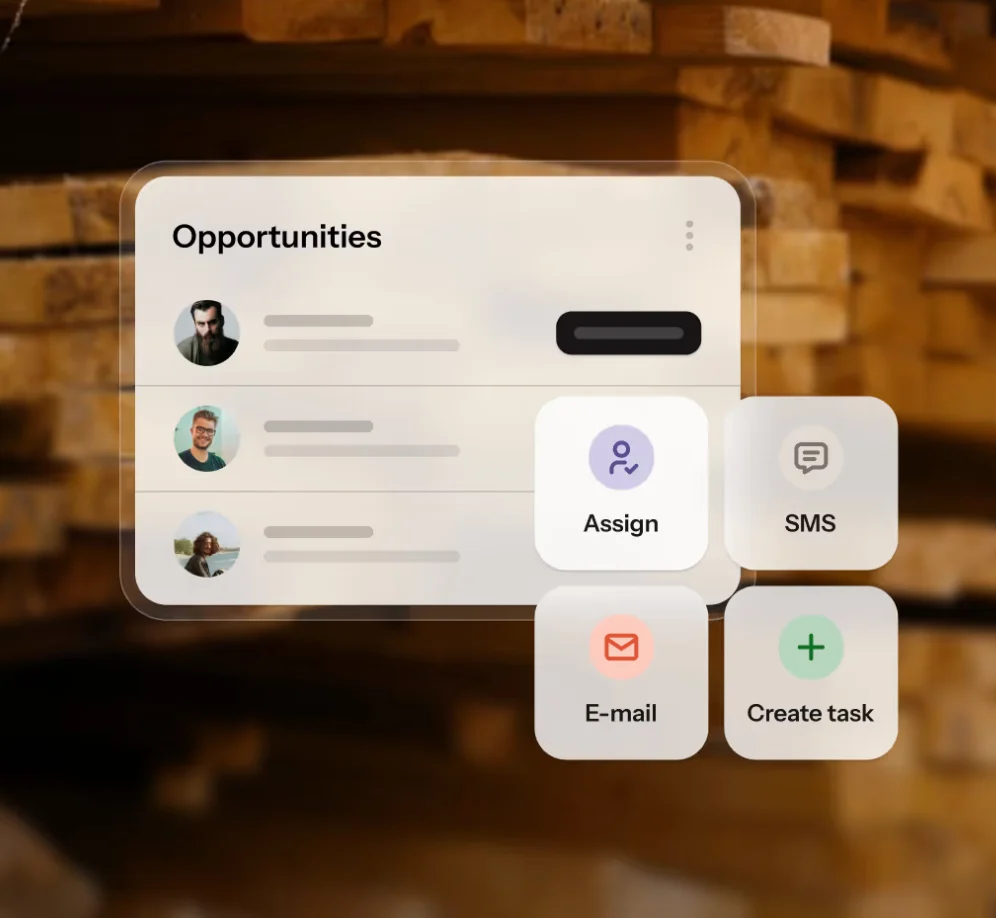
The right AI applications in building materials retail are narrow and specific. They eliminate repetitive work that prevents reps from selling.
Cleaning and routing permit data: Raw permit feeds contain thousands of entries across multiple jurisdictions. Most are irrelevant: wrong zip codes, non-applicable construction types, projects already quoted. AI filters permits automatically based on service area, construction type, and existing customer matches. It assigns leads to the right rep without manual distribution. What used to take hours of spreadsheet work happens in minutes without anyone touching it.
Identifying cross-sell opportunities: Contractors buy certain product categories consistently but skip others. AI analyzes transaction history across all accounts to flag patterns: which contractors buy framing but never doors, or roofing but never siding. It surfaces these gaps so reps can have targeted conversations rather than guessing what to pitch next. The rep still makes the call and handles the relationship. The system just points out where opportunity exists.
Flagging at-risk accounts before they leave: Contractors do not announce when they start buying elsewhere. Purchase frequency drops. Order sizes shrink. Months pass before someone notices. AI tracks account activity and alerts managers when buying behavior changes. It does not predict the future. It just notices patterns faster than manual review catches them.
Matching quotes to ERP records automatically: When a permit comes in for "ABC Construction LLC" but the ERP lists them as "ABC Const," the system needs to recognize they are the same company. AI handles name variations, abbreviations, and address mismatches so quotes get attached to the right accounts without manual matching. This seems minor until you realize how much time gets wasted reconciling data between systems.
These applications share a common trait: they automate judgment calls that do not require human expertise but consume time that could go toward actual selling.
AI has limits in contexts where relationships and local knowledge matter more than pattern recognition.
It cannot replace the conversation a rep has with a contractor about a complex job. It cannot assess whether a builder is reliable based on years of working together. It cannot negotiate pricing on a large order where margin and relationship history both matter.
AI does not understand which contractors prefer phone calls versus text. It does not know that the GC who just lost a big bid needs a different conversation than one who just won three jobs in a row.
The technology excels at processing structured data at scale. It struggles with the unstructured, context-dependent decisions that define relationship-based sales.
Lumber yards that try to automate too much end up creating systems reps work around rather than use.
The difference between AI that helps and AI that gets ignored comes down to implementation approach.
Start with problems, not features: Identify specific bottlenecks that slow down sales execution. Is permit data taking too long to clean and route? Are reps missing cross-sell opportunities because they cannot track what each account buys? Pick one clear problem and measure whether AI actually solves it before expanding.
Keep reps in control: AI should surface information and flag opportunities. It should not make decisions or take actions without rep involvement. If the system auto-sends emails or auto-assigns tasks, reps lose ownership. They stop trusting it. Implementation should add visibility, not remove autonomy.
Measure operational outcomes, not AI metrics: "AI accuracy" or "model confidence scores" mean nothing to sales teams. Track whether quote follow-up rates improve. Measure whether cross-sell revenue increases. Look at whether account retention gets better. If those numbers do not move, the AI is not helping regardless of how sophisticated it seems.
When AI fits correctly into lumber yard operations, results show up quickly.
Permit prospecting becomes systematic. Leads get routed to the right reps automatically. Follow-up happens faster because reps see new opportunities as soon as permits hit. New customer acquisition increases without adding headcount.
Cross-sell revenue grows because reps have clear visibility into what each contractor buys and does not buy. Conversations become more targeted. Category penetration improves across the customer base.
Account retention gets better because managers see declining activity early and can intervene before contractors fully switch suppliers.
Administrative work decreases. Reps spend less time managing spreadsheets and more time selling. Managers spend less time compiling reports and more time coaching.
The technology becomes invisible. Teams use it daily without thinking about it as "AI." It is just how the system works.
SalesJack applies AI specifically to the problems lumber yards face daily.
Permit data arrives from multiple jurisdictions in inconsistent formats. The system cleans it automatically, filters out irrelevant entries, matches permits to existing customers by recognizing company name variations, and routes new leads to the right reps based on territory and account ownership.
Transaction data from the ERP flows into the CRM. AI analyzes buying patterns across accounts to identify cross-sell opportunities and flags dormant accounts showing new activity. Reps see which contractors are actively building and which product categories they are not buying.
Quote data syncs automatically from the ERP. The system tracks quote age and status without manual updates. Managers see conversion rates and follow-up performance in real time.
The AI runs in the background. Reps see clean data, clear opportunities, and automated alerts. They do not interact with machine learning models or configure algorithms. They just get better information faster.
Evanston Lumber generated $2.5M in tracked revenue and grew new customer acquisition by 825% after implementing SalesJack. PARR Lumber drove $500,000 in new sales. The results came from better execution enabled by AI, not from the AI itself.
AI in lumber yard sales is not about replacing people or automating relationships. It is about eliminating the manual work that prevents sales teams from doing what they do best.
The technology works when it solves specific operational problems without requiring teams to change how they work. It fails when it tries to automate judgment or relationship management that requires human context.
Implementation of SalesJack’s lumber yard CRM takes 4-6 weeks including on-site training and data migration. Teams see results in the first 90 days because the technology supports how they already operate rather than requiring them to adopt new processes.
AI should make sales execution easier, not more complicated. When implemented correctly, it does.
Compare quote scope, identify the real price objection, and explain confirmed service differences before discussing a lumber quote discount.

Prepare current plans, project scope, unresolved selections and customer questions before handing a lumberyard material takeoff to the estimator.

Review recurring surplus stock-material returns with the builder, clarify ordering responsibility, and explain your lumberyard's actual return policy.